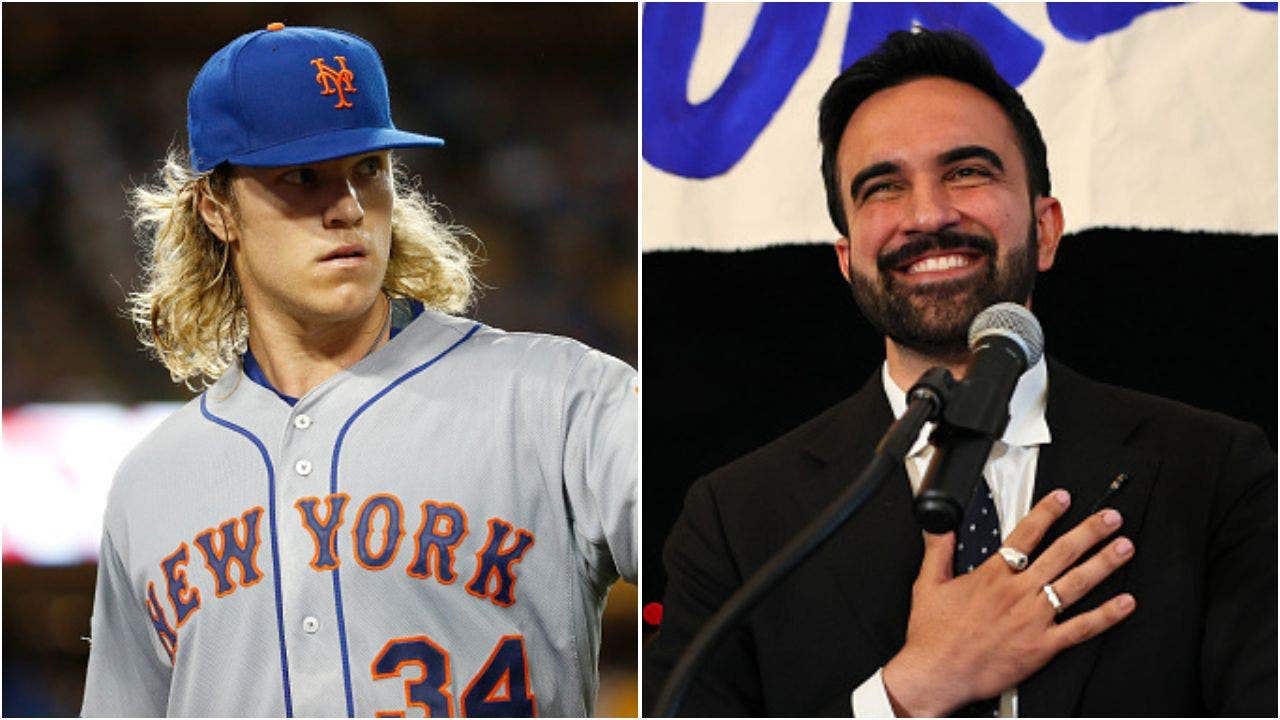
Former Major League Baseball pitcher Noah Syndergaard has publicly criticized Zohran Mamdani, a New York State Assembly member, suggesting that the dysfunction within the New York Mets baseball team mirrors the broader chaos in the city. Syndergaard's comments come amid ongoing frustrations with the Mets' management and performance, which he believes reflect deeper systemic issues.
Syndergaard, who played for the Mets before signing with other teams, expressed his discontent on social media, stating that the team's internal struggles are symptomatic of the larger disorder plaguing New York. He pointed out that the Mets' recent struggles on the field are not isolated incidents but part of a pattern of mismanagement and instability that characterizes much of the city's institutions.
In his critique, Syndergaard specifically referenced Zohran Mamdani, a progressive legislator known for his advocacy on housing and social justice issues. Syndergaard implied that Mamdani's policies and political stance contribute to the chaos and dysfunction that he perceives as permeating the city's political landscape. This comment has sparked a debate among fans and political observers alike, highlighting the intersection of sports, politics, and urban challenges.
The Mets, a team with a storied history, have faced a series of setbacks this season, including injuries, management controversies, and inconsistent performance. Syndergaard's remarks suggest that these issues are symptomatic of larger societal problems, including political instability and social unrest in New York City.
Experts note that the city's challenges—ranging from housing crises to public safety concerns—have become intertwined with the performance of local institutions, including sports teams. The criticism from Syndergaard underscores how sports figures are increasingly engaging in political discourse, reflecting the complex relationship between athletics and societal issues.
While some fans support Syndergaard's candidness, others argue that sports figures should remain apolitical. Nonetheless, his comments have brought renewed attention to the ongoing struggles within the Mets organization and the broader context of New York City's tumultuous environment.
As the Mets continue their season, the team's management faces pressure to address not only their on-field performance but also the underlying issues that Syndergaard and others believe are contributing to the team's dysfunction. Meanwhile, the city's political landscape remains volatile, with debates over policies and leadership intensifying amid ongoing social challenges.
Ultimately, Syndergaard's critique serves as a reminder of how interconnected sports, politics, and urban life have become, with each influencing perceptions and realities in the vibrant, yet tumultuous, city of New York.